nickel wire mesh and stainless steel wire mesh can look similar in a product catalog, but their performance differs significantly in corrosive chemicals, high-temperature equipment, batteries, filtration systems, and electrical applications. The better material depends on the operating temperature, chemical medium, current requirement, expected service life, and total project cost.
Users comparing these materials generally want more than a list of chemical properties. They want to know which mesh will remain stable in actual service, whether it will extend battery life, how much maintenance it may require, and whether the extra cost of nickel is justified. This comparison addresses those purchasing concerns and explains when stainless steel is the practical choice and when nickel wire mesh is the safer long-term investment.
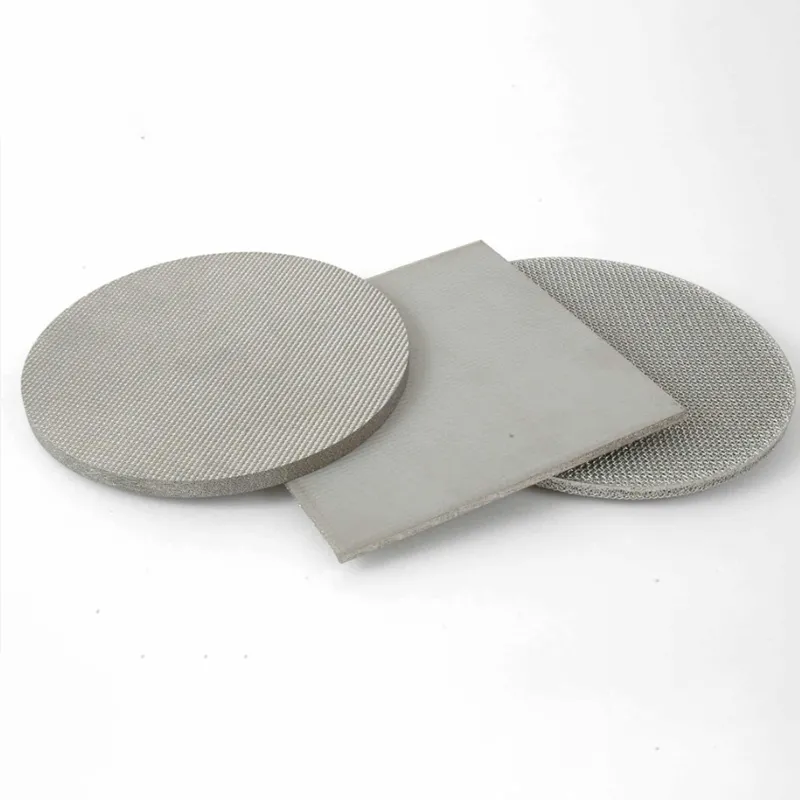
How Nickel Wire Mesh and Stainless Steel Wire Mesh Differ in Composition
Nickel wire mesh provides a high-purity nickel surface
Nickel wire mesh is commonly produced from commercially pure nickel, such as nickel 200 or nickel 201, although other nickel alloys may also be used for specialized conditions. Its high nickel content gives the mesh strong resistance to alkalis, reducing environments, and several aggressive chemical media.
- Typical material: commercially pure nickel or a nickel alloy.
- Main strengths: chemical stability, electrical conductivity, ductility, and resistance to oxidation at elevated temperatures.
- Typical applications: battery electrodes, alkaline processing, chemical filtration, furnace components, shielding, and electrochemical equipment.
- Main limitation: higher material cost than common stainless steel grades.
Stainless steel wire mesh combines iron with chromium and other alloying elements
Stainless steel wire mesh is made from iron-based alloys containing chromium. Common grades include 304, 316, 310, and 316L. Chromium forms a passive oxide layer that protects the surface from many forms of corrosion, while molybdenum in 316 and 316L improves resistance to chlorides and some chemical environments.
- Typical material: 304, 316, 316L, 310, or another stainless steel grade.
- Main strengths: availability, mechanical strength, relatively low cost, and good general corrosion resistance.
- Typical applications: food processing, architectural screens, water filtration, general chemical equipment, sieving, and furnace support parts.
- Main limitation: performance can decline in hot chlorides, reducing environments, strong alkalis, or prolonged high-temperature cycling.
Therefore, the word stainless does not mean corrosion-proof, and the word nickel does not automatically mean suitable for every chemical. Material grade, mesh construction, wire diameter, surface condition, and operating conditions must all be evaluated together.
Core Parameter Comparison for Purchasing Decisions
Nickel wire mesh offers a stronger performance margin in demanding environments
The following table provides a practical comparison. Values are representative ranges rather than fixed guarantees because the exact result depends on the grade, mesh opening, wire diameter, atmosphere, stress level, and exposure time.
| Parameter | Nickel wire mesh | Stainless steel wire mesh | Purchasing significance |
|---|
| Typical grades | Nickel 200, Nickel 201, nickel alloys | 304, 316, 316L, 310, and other grades | The grade must match the chemical and thermal environment. |
| General corrosion resistance | Very good in many alkaline and reducing environments | Good to very good in common atmospheric, water, and mildly chemical environments | Nickel is often safer when the medium is strongly alkaline or chemically reducing. |
| Chloride resistance | Depends on grade and temperature; not universally immune | 316 is better than 304, but pitting and crevice corrosion remain possible | Do not select only by the word stainless or nickel; test the actual chloride concentration and temperature. |
| High-temperature oxidation | Good, especially in suitable controlled atmospheres | Good for selected grades, with 310 generally better than 304 or 316 | Grade selection becomes more important above approximately 500 degrees Celsius. |
| Continuous service temperature | Can support demanding thermal service when the atmosphere is suitable | Common grades are suitable for moderate heat; 310 is preferred for higher heat | Use the supplier's temperature limit for the exact mesh and atmosphere. |
| Electrical conductivity | Higher than most stainless steels | Relatively low compared with nickel | Nickel is usually more suitable for current collection and electrochemical contact. |
| Mechanical strength | Ductile and stable, with strength varying by grade and work hardening | Strong and widely available in many wire diameters | Stainless steel may be more economical when structural strength is the primary requirement. |
| Thermal cycling stability | Good when the mesh is correctly supported and the atmosphere is controlled | Good in moderate service, but repeated cycling can cause scaling, distortion, or sensitization in some grades | Ask for thermal cycling data rather than relying only on a maximum temperature figure. |
| Approximate relative material cost | High | Low to medium for 304 and 316; higher for specialty grades | Consider replacement, downtime, and cleaning costs, not only purchase price. |
| Availability and customization | Available, but lead times may be longer for special specifications | Usually widely stocked with many mesh openings and wire diameters | Stainless steel is often easier to source for urgent or standard projects. |
The table shows why there is no universal winner. Stainless steel usually wins on price and availability, while nickel wire mesh often wins when electrical conductivity, alkaline resistance, or long-term chemical stability is more important than initial cost.
Corrosion Resistance: Which Mesh Performs Better?
Nickel wire mesh is often preferable in alkaline and reducing media
Nickel has strong resistance to many alkaline solutions, particularly when the operating conditions are reducing rather than strongly oxidizing. This makes it useful in alkaline batteries, caustic processing, chemical electrodes, and equipment exposed to certain hot chemical solutions.
In practical service, nickel mesh is less likely to lose functional performance quickly when the chemical environment attacks stainless steel's passive layer. It can maintain electrical contact and mesh integrity for a longer period when the application is properly matched to the nickel grade.
- Choose nickel when the solution is strongly alkaline and the temperature is elevated.
- Choose nickel when the mesh is part of an electrochemical reaction or current path.
- Choose nickel when replacement requires equipment shutdown or creates high labor costs.
- Confirm compatibility when strong oxidizers, sulfur compounds, or unusual molten salts are present.
Stainless steel is effective in many atmospheric, water, and general industrial environments
Stainless steel is a strong general-purpose choice for humid air, clean water, food processing, architectural use, and many nonaggressive industrial environments. Grade 316 or 316L is typically preferred over 304 when chloride exposure is expected, but even 316 can suffer pitting corrosion in warm or concentrated chloride solutions.
Stainless steel can also experience crevice corrosion beneath deposits, gaskets, clamps, or trapped contaminants. A mesh that looks intact on the surface may have localized damage at contact points or in areas that are difficult to clean.
- Choose 304 for many general-purpose indoor and low-corrosion applications.
- Choose 316 or 316L for improved resistance to seawater spray, chlorides, and chemical cleaning.
- Choose a higher-alloy stainless grade when both temperature and oxidation resistance are required.
- Do not use ordinary 304 mesh as a default choice for hot chloride or strongly alkaline service.
High-Temperature Performance and Thermal Stability
Nickel wire mesh retains useful stability in selected high-temperature applications
Nickel wire mesh is suitable for many furnace, heating, chemical, and electrochemical applications where the mesh must remain conductive and dimensionally stable at elevated temperatures. Its performance is especially valuable when heat is combined with alkaline or reducing chemistry.
However, the surrounding atmosphere matters. Nickel can perform differently in air, hydrogen, vacuum, sulfur-containing gas, and molten salt. Wire diameter and mesh opening also affect heating, thermal expansion, sagging, and mechanical support.
- Evaluate continuous temperature, peak temperature, and heating cycle frequency.
- Check whether the atmosphere is oxidizing, reducing, inert, vacuum-based, or chemically active.
- Use adequate support to reduce sagging and distortion in large mesh panels.
- Confirm whether the mesh must also carry electrical current during heating.
Stainless steel performance depends heavily on the selected grade
Stainless steel can perform well at elevated temperatures, but 304 and 316 should not be treated as equivalent to high-temperature grades. Prolonged heat can cause oxidation, scaling, distortion, carbide precipitation, or loss of corrosion resistance in certain conditions. Grade 310 is often considered when oxidation resistance and high-temperature strength are more important than the lower cost of 304.
Repeated heating and cooling can be more damaging than a single short exposure. Thermal expansion creates stress at welded joints, clamps, and fixed edges. Before choosing stainless steel, request information about continuous service, intermittent service, thermal cycling, and the required surface condition after heating.
Actual Use Experience in Batteries and Electrochemical Equipment
Nickel mesh can support longer battery stability when it is used as a current collector
In alkaline batteries, nickel-metal hydride batteries, nickel-based electrodes, and some electrochemical systems, nickel mesh is used because it combines conductivity, corrosion resistance, open structure, and good bonding potential for active materials. The mesh can provide a stable path for current while allowing electrolyte movement.
Users may describe the result as longer battery life, better discharge stability, lower voltage loss, and more consistent performance over repeated cycles. These benefits do not come from the mesh alone. They also depend on electrode chemistry, coating thickness, porosity, electrolyte concentration, temperature, charging protocol, and cell design.
- Potential benefit: lower contact resistance than common stainless steel mesh.
- Potential benefit: better resistance to alkaline electrolyte attack.
- Potential benefit: more stable electrode support during repeated charge and discharge cycles.
- Potential benefit: lower risk of premature loss of electrical contact.
- Important limitation: nickel mesh cannot compensate for poor active material adhesion or an unsuitable battery formulation.
Stainless steel mesh can work in prototypes and less demanding electrochemical systems
Stainless steel is often selected for laboratory prototypes, low-cost electrode supports, filtration layers, and systems where the electrolyte is mild and the expected cycle count is limited. It is easy to obtain and can be economical during early-stage testing.
In hot alkaline or long-cycle service, however, stainless steel may show increasing contact resistance, localized corrosion, surface passivation, or degradation at connection points. These effects can reduce discharge consistency and shorten the practical service life of the battery assembly.
For a fair comparison, test both materials under the same conditions and record the following results:
- Initial resistance and resistance after cycling.
- Voltage stability during discharge.
- Capacity retention after 100, 500, or more cycles as required by the project.
- Surface condition after electrolyte exposure.
- Mesh strength and dimensional change after charging and discharging.
- Temperature rise at the same current density.
Advantages and Disadvantages at a Glance
Nickel wire mesh advantages and disadvantages
- Advantages: strong performance in many alkaline environments.
- Advantages: higher electrical conductivity than common stainless steel.
- Advantages: useful stability in many high-temperature and electrochemical applications.
- Advantages: suitable for long service where replacement is expensive or difficult.
- Disadvantages: higher raw material and processing cost.
- Disadvantages: fewer standard sizes may be immediately available.
- Disadvantages: compatibility must still be checked in strongly oxidizing or sulfur-containing environments.
- Disadvantages: improper support can cause distortion even when the material itself is corrosion resistant.
Stainless steel wire mesh advantages and disadvantages
- Advantages: lower cost for many standard applications.
- Advantages: broad availability and many mesh specifications.
- Advantages: good mechanical strength and easy fabrication.
- Advantages: reliable performance in air, water, food processing, and general industrial service.
- Disadvantages: possible pitting and crevice corrosion in chloride environments.
- Disadvantages: lower electrical conductivity than nickel.
- Disadvantages: common grades may lose corrosion resistance after prolonged high-temperature exposure.
- Disadvantages: a low initial price can become expensive if corrosion causes frequent replacement.
How Cost, Service Life, and Stability Affect Total Value
The lowest purchase price is not always the lowest project cost
Stainless steel mesh may reduce the initial purchase budget, but a lower price is valuable only when the mesh reaches the required service life. Corrosion-related replacement can include material, labor, cleaning, production downtime, disposal, testing, and safety costs.
Nickel wire mesh often has a higher initial price, but it may deliver better total value when failure is difficult to detect or when a shutdown is costly. This is particularly important in batteries, chemical processing equipment, continuous filtration, furnace systems, and remote installations.
- Estimate the expected service life of each material.
- Calculate replacement frequency and labor cost.
- Include downtime and lost production in the comparison.
- Compare performance after aging, not only performance when new.
- Consider whether the mesh must maintain electrical conductivity throughout service.
Stability should be measured with application-specific testing
Terms such as durable, heat resistant, and corrosion resistant are not sufficient for a purchase specification. A reliable selection should define the chemical concentration, temperature, exposure time, mechanical load, mesh dimensions, and acceptance criteria.
For demanding projects, request samples and compare them through accelerated testing. Inspect the mesh for broken wires, mass loss, pitting, discoloration, loss of flexibility, dimensional change, and increased electrical resistance.
Which Material Should Different Purchasing Groups Choose?
Nickel wire mesh is better for demanding electrochemical and alkaline applications
Nickel is usually the stronger choice for buyers who prioritize conductivity, alkaline resistance, thermal stability, and long cycle life over the lowest purchase price.
- Battery manufacturers using alkaline or nickel-based chemistry.
- Electrode and current collector manufacturers.
- Chemical processing plants handling hot alkaline solutions.
- Furnace and heating equipment manufacturers requiring conductive mesh.
- Projects where mesh replacement would interrupt continuous production.
- Buyers who need stable performance over repeated thermal or electrochemical cycles.
Stainless steel wire mesh is better for general-purpose and cost-sensitive applications
Stainless steel is usually the better choice when the chemical environment is moderate, the temperature is controlled, and the project requires readily available standard mesh at a competitive price.
- General filtration and screening.
- Food, pharmaceutical, and clean manufacturing equipment when the selected grade meets sanitation requirements.
- Architectural, ventilation, and protective mesh applications.
- Water filtration with controlled chloride levels.
- Laboratory prototypes where replacement and testing are straightforward.
- Structural mesh components where electrical conductivity is not important.
Use a higher-alloy stainless steel when nickel is not required but heat resistance is essential
Some projects do not need pure nickel but still exceed the practical temperature range of 304 or 316. In those cases, a high-temperature stainless grade such as 310 may provide a reasonable compromise between cost and thermal performance. The choice should be confirmed against the exact atmosphere and corrosion medium.
Questions to Confirm Before Ordering Wire Mesh
Material and operating conditions determine whether a quotation is technically suitable
Before requesting a quote from Ruiyun or another wire mesh supplier, prepare a complete specification. This helps prevent an apparently suitable mesh from failing after installation.
- What is the required material grade?
- What are the mesh opening and wire diameter?
- Will the mesh be woven, welded, sintered, expanded, or perforated?
- What chemical medium will contact the mesh?
- What are the concentration, temperature, pressure, and exposure duration?
- Is the atmosphere oxidizing, reducing, inert, vacuum-based, or humid?
- Will the mesh carry current or only provide mechanical support?
- What are the required tensile strength, flatness, and dimensional tolerances?
- Is surface cleaning, passivation, coating, or heat treatment required?
- What inspection documents and sample tests are needed?
For battery and electrochemical projects, add current density, electrolyte composition, charge and discharge profile, target cycle count, electrode coating method, and allowable resistance change. For furnace projects, add heating rate, cooling rate, support spacing, maximum sag, and expected number of thermal cycles.
Final Recommendation for Nickel Wire Mesh vs. Stainless Steel Wire Mesh
Choose according to failure risk rather than material popularity
Nickel wire mesh is generally better for hot alkaline environments, current collection, battery electrodes, and applications where long-term chemical and electrical stability are critical. It can provide more consistent performance and longer practical service life when the application is correctly designed.
Stainless steel wire mesh is generally better for standard filtration, moderate corrosion, common industrial environments, and projects where availability and initial cost are the main priorities. Grade 316 or 316L should be considered when chloride exposure is present, while 310 may be more appropriate for selected high-temperature applications.
The final decision should be based on real operating data, not only on catalog descriptions. Compare corrosion rate, resistance change, thermal cycling behavior, maintenance frequency, and replacement cost. Ruiyun can help buyers match nickel wire mesh or stainless steel wire mesh to the required mesh opening, wire diameter, grade, and application conditions. When corrosion, heat, and electrical stability all matter, nickel wire mesh is often the safer long-term choice.

